As an automobile expert who has closely followed fuel trends, engine performance issues, and long-term vehicle durability, I can confidently say that ethanol content in petrol is one of the most important fuel-related topics today. Many drivers unknowingly fill their tanks with ethanol-blended petrol without fully understanding how it affects their engine, mileage, maintenance costs, and even resale value.
With governments worldwide pushing for cleaner fuels and reduced oil imports, ethanol blending is no longer optional—it’s becoming the new normal. But is it truly good for your vehicle? Or are there hidden downsides no one talks about?
Let’s break it down in simple, practical terms.
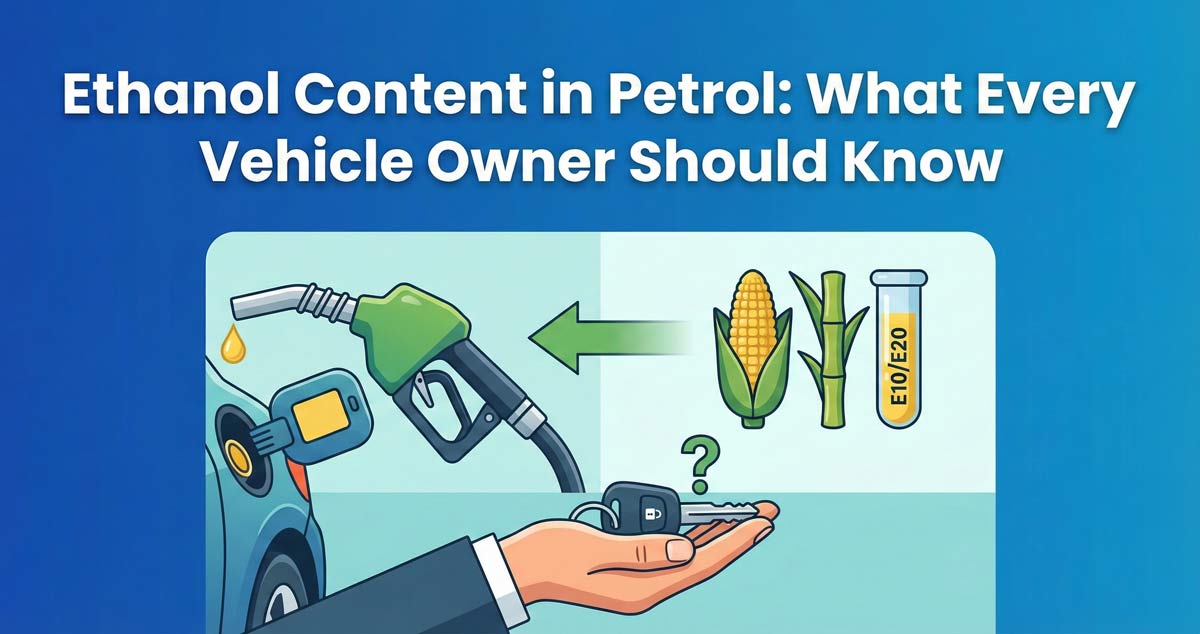
Ethanol content in petrol refers to the percentage of ethanol blended into gasoline to reduce emissions and oil dependency. Common blends like E10 and E20 affect mileage, engine compatibility, and fuel stability. While ethanol improves octane and burns cleaner, its chemical structure (C₂H₅OH) attracts moisture, which can impact engine components over time—especially in older vehicles. Understanding ethanol content in gasoline helps vehicle owners choose the right fuel, protect engine health, and maintain long-term performance.
Contents
- 1 What Is Ethanol and Why Is It Mixed With Petrol?
- 2 Understanding Ethanol Content in Petrol
- 3 Ethanol Content in Gasoline: How It Affects Your Engine
- 4 Ethanol Structure: A Simple Explanation
- 5 Is Ethanol-Blended Petrol Better for the Environment?
- 6 How Ethanol Affects Two-Wheelers vs Cars
- 7 Ethanol Content in Petrol and Engine Longevity
- 8 Does Ethanol Improve Octane Rating?
- 9 Storage Problems With Ethanol-Blended Fuel
- 10 How to Protect Your Vehicle From Ethanol Damage
- 11 Ethanol Blending and Future Vehicles
- 12 My Expert Verdict on Ethanol Content in Petrol
- 13 Frequently Asked Questions (FAQ)
- 13.1 What is the ideal ethanol content in petrol for cars?
- 13.2 Is ethanol content in gasoline bad for engines?
- 13.3 Can ethanol-blended petrol damage fuel injectors?
- 13.4 What is ethanol structure and why does it matter?
- 13.5 Does ethanol reduce mileage?
- 13.6 Are new cars compatible with E20 petrol?
- 13.7 Is ethanol fuel cheaper in the long run?
- 13.8 Can I mix different ethanol fuels?
- 14 Final Thoughts From an Auto Expert
What Is Ethanol and Why Is It Mixed With Petrol?

Ethanol is a renewable biofuel, primarily made from sugarcane, corn, and other plant materials. Chemically, it is an alcohol and is widely used as an additive in petrol.
The main reasons ethanol is blended with petrol include:
- Reducing dependency on crude oil imports
- Lowering carbon monoxide emissions
- Improving fuel oxygenation for cleaner combustion
- Supporting the agricultural economy
From a policy perspective, ethanol blending makes sense. But from a vehicle owner’s perspective, the story is more nuanced.
Understanding Ethanol Content in Petrol
When you hear terms like E10, E15, or E20, they refer to the percentage of ethanol mixed with petrol.
Common Ethanol Blends Explained
- E5 – 5% ethanol, 95% petrol
- E10 – 10% ethanol, 90% petrol
- E15 – 15% ethanol, 85% petrol
- E20 – 20% ethanol, 80% petrol
In many countries, E10 is already standard, and E20 is being rolled out gradually.
In India, fuel quality and ethanol-blended petrol standards are defined to ensure compatibility with modern engines and emission norms.
As an auto expert, I can tell you this clearly: not all engines are designed to handle higher ethanol blends, especially older vehicles.
Ethanol Content in Gasoline: How It Affects Your Engine
1. Reduced Mileage (Fuel Efficiency)

Ethanol contains less energy per liter compared to petrol. This means:
- Higher ethanol content = lower mileage
- E10 can reduce mileage by 3–5%
- E20 can reduce mileage by up to 8–10%
Many drivers complain about lower fuel economy without realizing ethanol content in gasoline is the reason.
2. Engine Compatibility Issues

Older engines—especially those manufactured before ethanol blending became common—may experience:
- Rubber seal damage
- Fuel hose deterioration
- Corrosion in fuel tanks
- Injector clogging
Newer vehicles are designed to tolerate ethanol, but even then, long-term wear increases with higher blends.
3. Cold Start Problems

Ethanol evaporates differently than petrol. In colder climates or during winter mornings, high ethanol content can cause:
- Hard starting
- Rough idling
- Engine hesitation
This is a common complaint I see in workshops.
Ethanol Structure: A Simple Explanation
To understand why ethanol behaves differently, let’s look at the ethanol structure.
Ethanol’s chemical formula is C₂H₅OH. It contains:
- Two carbon atoms
- Five hydrogen atoms
- One hydroxyl (–OH) group
This –OH group is what makes ethanol hygroscopic—meaning it attracts and absorbs water.
Why Ethanol Structure Matters in Engines
Because of its molecular structure:
- Ethanol absorbs moisture from air
- Water contamination becomes more likely
- Fuel separation can occur in storage
- Metal corrosion risk increases
This is one of the biggest technical concerns with high ethanol content in petrol.
Is Ethanol-Blended Petrol Better for the Environment?
From an emissions standpoint, ethanol does help:
- Reduces carbon monoxide emissions
- Burns cleaner than pure petrol
- Lowers greenhouse gas output (on paper)
However, the environmental benefit depends on:
- Farming practices used to grow feedstock
- Water usage in ethanol production
- Land-use changes
As an expert, I would say ethanol is cleaner at the tailpipe, but not always cleaner across its entire lifecycle.
How Ethanol Affects Two-Wheelers vs Cars
Two-Wheelers

Two-wheelers are more sensitive to ethanol because:
- Smaller fuel systems
- Less robust rubber components
- Higher exposure to fuel evaporation
Common issues include carburetor blockage, injector clogging, and poor throttle response.
Cars

Modern cars handle ethanol better, but problems still occur:
- Reduced mileage
- Check engine lights
- Fuel pump wear
- Long-term injector damage
Diesel vehicles, of course, are unaffected.
Ethanol Content in Petrol and Engine Longevity
One of the biggest concerns vehicle owners ask me about is engine life.
Here’s the honest answer:
- Low ethanol blends (E5–E10): Minimal long-term impact
- Mid blends (E15): Increased wear over time
- High blends (E20+): Noticeable durability concerns if engine isn’t designed for it
Manufacturers now label vehicles as “E20 compliant”, which is essential information when buying a new car.
Does Ethanol Improve Octane Rating?
Yes, ethanol has a higher octane rating than petrol.
Benefits include:
- Reduced engine knocking
- Smoother combustion
- Potential for higher compression engines
However, higher octane does not mean higher energy content. Mileage still drops.
Storage Problems With Ethanol-Blended Fuel
If you don’t drive often, ethanol fuel can cause trouble.
Because of ethanol’s structure:
- Fuel degrades faster
- Water absorption increases
- Gum and varnish formation occurs
I’ve personally seen engines damaged simply due to fuel sitting unused for months.
How to Protect Your Vehicle From Ethanol Damage
Practical Tips From an Auto Expert
- Avoid storing fuel for long periods
- Use fuel stabilizers if vehicle is unused
- Drive regularly to circulate fresh fuel
- Follow manufacturer ethanol guidelines
- Avoid higher blends if vehicle isn’t certified
These small steps can save you expensive repairs.
Ethanol Blending and Future Vehicles
The future of fuel is clearly moving toward:
- Flex-fuel vehicles
- Hybrid engines
- Alternative fuels
Upcoming engines will be designed to handle ethanol more efficiently, but current vehicles still face a transition challenge.
My Expert Verdict on Ethanol Content in Petrol
Ethanol blending is inevitable, but it is not universally beneficial.

| Pros: | Cons: |
| Cleaner emissions Reduced oil imports Higher octane | Lower mileage Engine wear risk Storage and compatibility issues |
As an auto expert, my advice is simple:
Know what your vehicle supports and fuel accordingly.
Frequently Asked Questions (FAQ)
What is the ideal ethanol content in petrol for cars?
For most existing vehicles, E10 (10% ethanol) is the safest balance between performance and emissions.
Is ethanol content in gasoline bad for engines?
It’s not inherently bad, but higher blends can cause fuel system wear, especially in older or non-compliant engines.
Can ethanol-blended petrol damage fuel injectors?
Yes, prolonged use of high ethanol blends can cause injector clogging and corrosion, especially if fuel quality is poor.
What is ethanol structure and why does it matter?
The ethanol structure (C₂H₅OH) includes a hydroxyl group that attracts water, increasing corrosion and fuel degradation risks.
Does ethanol reduce mileage?
Yes. Ethanol has lower energy density than petrol, resulting in reduced fuel efficiency.
Are new cars compatible with E20 petrol?
Only vehicles specifically labeled E20 compliant are designed to handle 20% ethanol safely.
Is ethanol fuel cheaper in the long run?
While ethanol-blended fuel may be cheaper at the pump, reduced mileage and maintenance costs can offset savings.
Can I mix different ethanol fuels?
Yes, but it’s not recommended to exceed your vehicle’s certified ethanol limit.
Final Thoughts From an Auto Expert
Ethanol content in petrol is reshaping how engines perform, how fuels behave, and how vehicles age. While it supports environmental goals, it also demands greater awareness from vehicle owners.
Understanding ethanol content in gasoline and the ethanol structure helps you make smarter fueling decisions decisions that protect both your engine and your wallet.